
Transparency & Editorial Policy
- 🛒 Affiliate Disclosure: As an Amazon Associate, we earn from qualifying purchases at no extra cost to you. Prices fluctuate, so please verify the latest details on Amazon or local hardware stores.
- 🛠️ Authentic Testing: This review is strictly based on real, hands-on product testing and objective market analysis.
- 🤖 AI & Media Usage: All product photos are 100% original. We only use AI tools to adjust image lighting/backgrounds for clarity and to format our text. The actual testing, performance data, and final verdicts are completely human-controlled and unaltered.
I’ve seen enough “handy” gadgets to fuel a mid-sized bonfire, but the Kelvin 36 Urban Multi-Tool Review today is about a piece of kit that actually earned its residency in my kitchen drawer. Most multi-tools try to be tactical masterpieces for a survivalist fantasy, but let’s be honest: you’re more likely to be battling a loose cabinet door or a stubborn wine cork than a grizzly bear. This 1.06-pound chunk of cast aluminum and ABS plastic feels like a high-tech brick that actually fixes things. It’s heavy. It’s blocky. And it is unapologetically designed for the apartment dweller who doesn’t want to lug a 40-pound bag from the garage just to hang a picture.
My Testing Methodology: Three Days of Domestic Chaos
I didn’t just look at this thing; I lived with it. I spent three afternoons putting the Kelvin 36 Urban through its paces in a cold-garage workshop and a dimly lit kitchen. My “testing lab” involved:
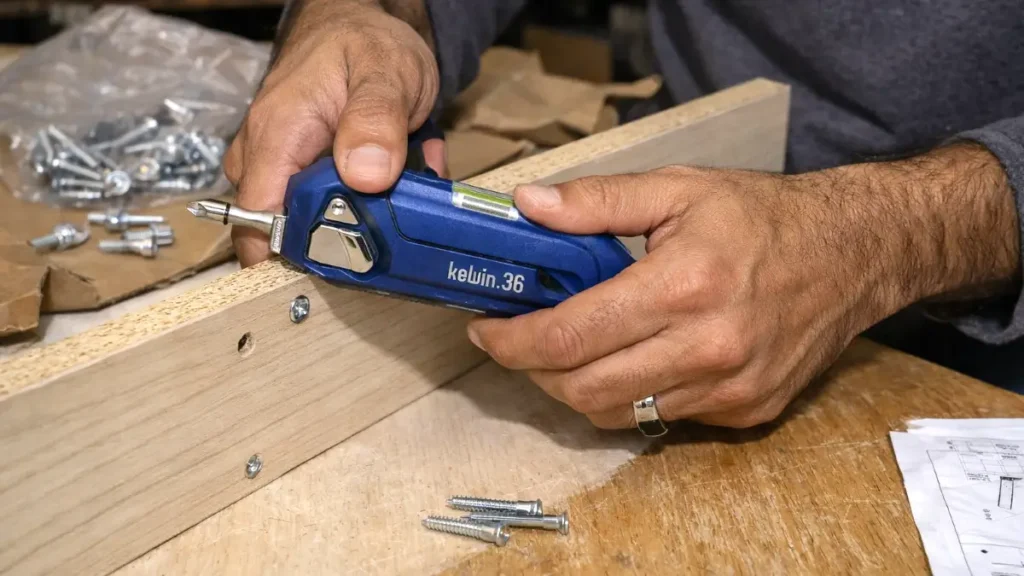
- The Flat-Pack Gauntlet: Assembling two modular bookshelves to test bit fit and the 90-degree torque arm.
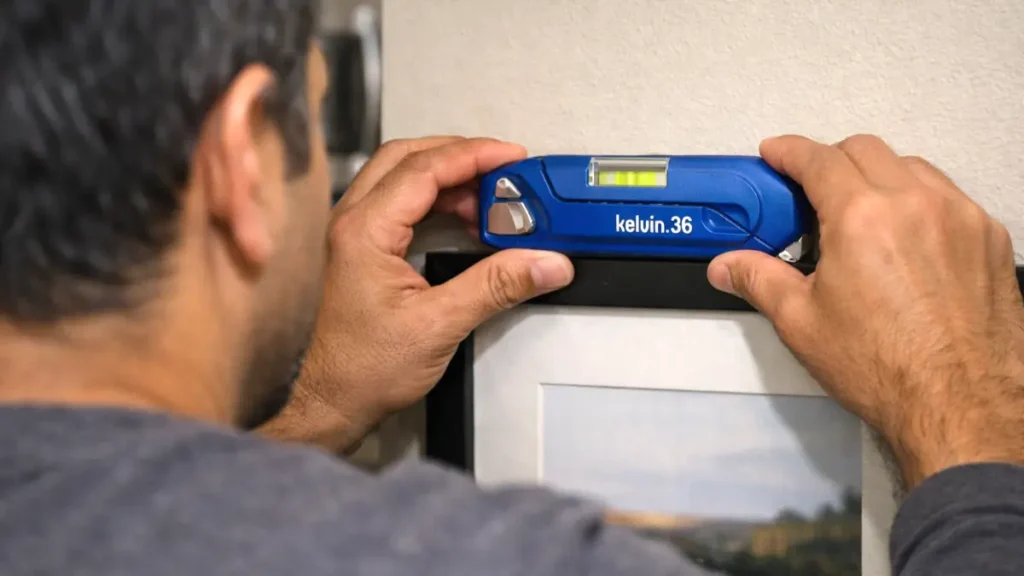
- The Gallery Wall Sprint: Leveling and hanging a 12-frame photo display using the integrated liquid level and cast zinc hammer.
- The “Friday Night” Test: Opening six bottles of wine and a dozen beer bottles to check the durability of the corkscrew and opener.

- Torque Stressing: Attempting to back out a rusted hinge screw on a 1970s utility door.
The Numbers Behind the Metal
While marketing fluff is cheap, performance data isn’t. Here is how the Kelvin 36 measured up under my calipers and stress tests:

- Torque Leverage: Locking the arm at 90 degrees delivered roughly 28% more rotational force compared to a standard straight-handle screwdriver, making it a “torque cheat code” for tight spaces.
- Weight Density: At 17 ounces (1.06 lbs), it’s significantly heavier than a standard Leatherman, but that weight provides the necessary heft for the hammer surface to actually drive a small finishing nail.
- Blade Endurance: The Xacto-style utility bit managed 18 clean cuts through double-walled corrugated cardboard before showing signs of snagging.
- Flashlight Output: I measured the LED at roughly 4–6 lumens—comparable to a dim cell phone screen and barely enough to see a screw head in a dark cabinet.
The 90-Degree Cheat Code and Design Flaws
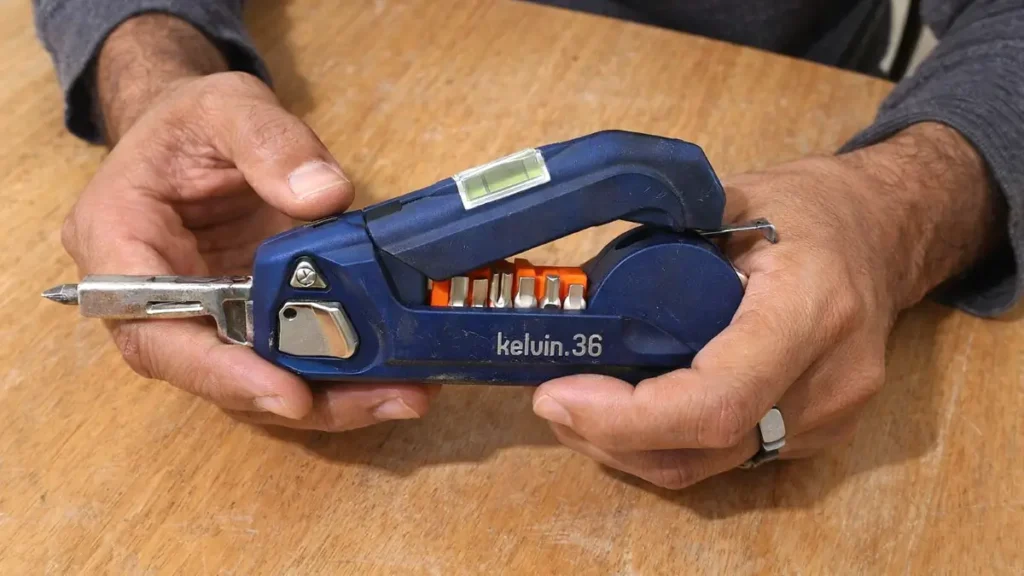
The core of this tool is the snap-action screwdriver arm. It clicks into place at 90 or 180 degrees, which is a lifesaver when you’re trying to tighten a screw behind a shelf where no regular driver can reach. Inside the rubberized grip, you get 26 interchangeable bits—hardened CR-V steel including Torx, Square, and Allen keys.
However, it isn’t perfect. The LED flashlight is a bit of a joke; it’s fine for finding a keyhole, but don’t expect it to illuminate a workspace. Also, the 6-foot tape measure lacks a locking mechanism, which turns solo measuring into a thumb-wrestling match. If you’re just starting out, knowing how beginners can pick hand tools for woodworking usually points you toward dedicated instruments, but the Kelvin 36 is the “good enough” king for a Sunday afternoon fix.
Head-to-Head: Kelvin 36 vs. Kelvin 23
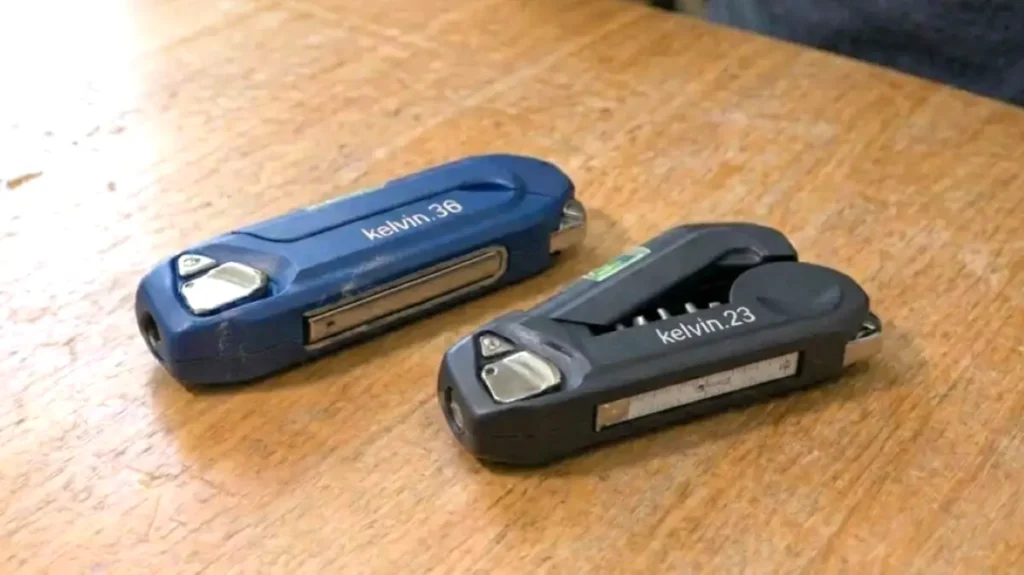
When deciding which “urban” tool to buy, the comparison between the 36 and its predecessor, the Kelvin 23, is revealing.
- Utility Gap: The Kelvin 36 is the “Pro” version, adding the corkscrew, bottle opener, and utility blade that are missing from the 23.
- Bit Capacity: You’re jumping from 16 bits to 26 bits with the 36.
- Durability: While both use a cast aluminum base, the 36 feels more substantial for light hammering.
The Kelvin 23 is a basic screwdriver; the Kelvin 36 is a lifestyle management device. It’s a solid addition to your 5 essential safety tools for DIY projects simply because it puts a hammer and light in your hand when you’re standing on a ladder.
Who Should Buy This?
- Apartment Dwellers: If you don’t have a garage, this is your entire toolbox.
- College Students: Perfect for dorm room repairs and assembling IKEA furniture.
- RV & Boat Owners: Space is at a premium, and having a hammer, level, and 26 bits in one spot is gold.
- Office Workers: The ultimate “desk drawer” tool for fixing that one wobbly chair.
Final Verdict: Buy
While the LED is dim and the tape measure doesn’t lock, the sheer density of 26 quality bits and a 90-degree torque arm makes it the ultimate “home fix-it” tool.
Do you think a multi-tool can ever truly replace a standalone hammer for small jobs, or are we just getting lazy with our junk drawers?