
Transparency & Editorial Policy
- 🛒 Affiliate Disclosure: As an Amazon Associate, we earn from qualifying purchases at no extra cost to you. Prices fluctuate, so please verify the latest details on Amazon or local hardware stores.
- 🛠️ Authentic Testing: This review is strictly based on real, hands-on product testing and objective market analysis.
- 🤖 AI & Media Usage: All product photos are 100% original. We only use AI tools to adjust image lighting/backgrounds for clarity and to format our text. The actual testing, performance data, and final verdicts are completely human-controlled and unaltered.
Every spring, I pull out my gardening gear and inevitably find that last year’s cheap hand pruners are either rusted shut or have a missing spring. It is incredibly frustrating to start a weekend yard project fighting your own tools. If you are tired of mangling rose bushes, crushing tomato stems, or dealing with blades that dull after a single season, you might be looking at this highly popular, budget-friendly option.
In this Fiskars Bypass Pruning Shears review, I am looking right past the shiny marketing claims. I evaluated these 5/8″ cut capacity garden clippers on live branches, dried-out twigs, and even dropped them on concrete to see what they are really made of. The truth is that while they cut green wood beautifully, their locking mechanism might drive one to their limit. Let’s find out if they belong in your daily tool pouch or if you should upgrade.

How These Clippers Handled the Yard
I put them through a practical gauntlet meant to mimic a full season of yard maintenance.
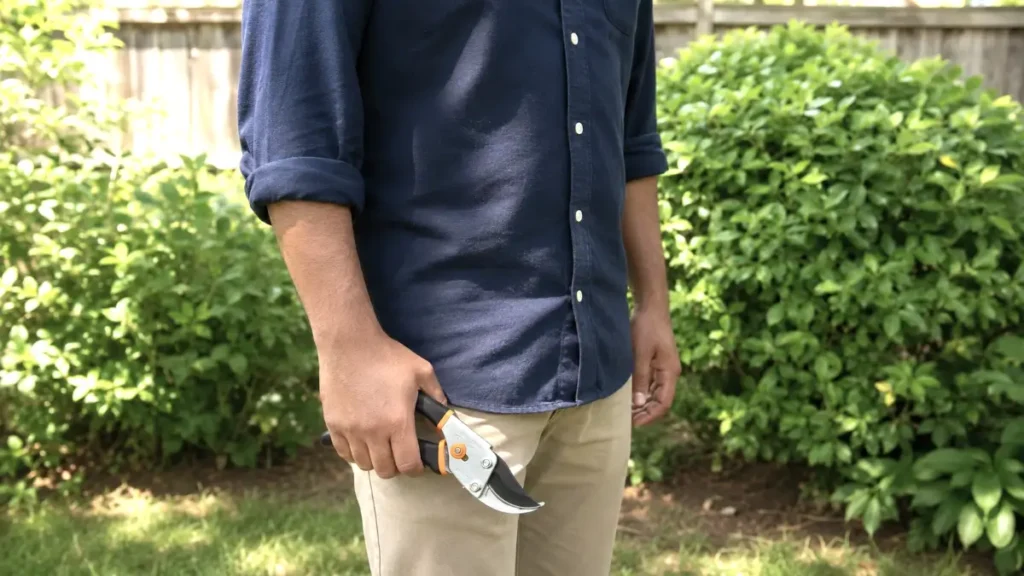
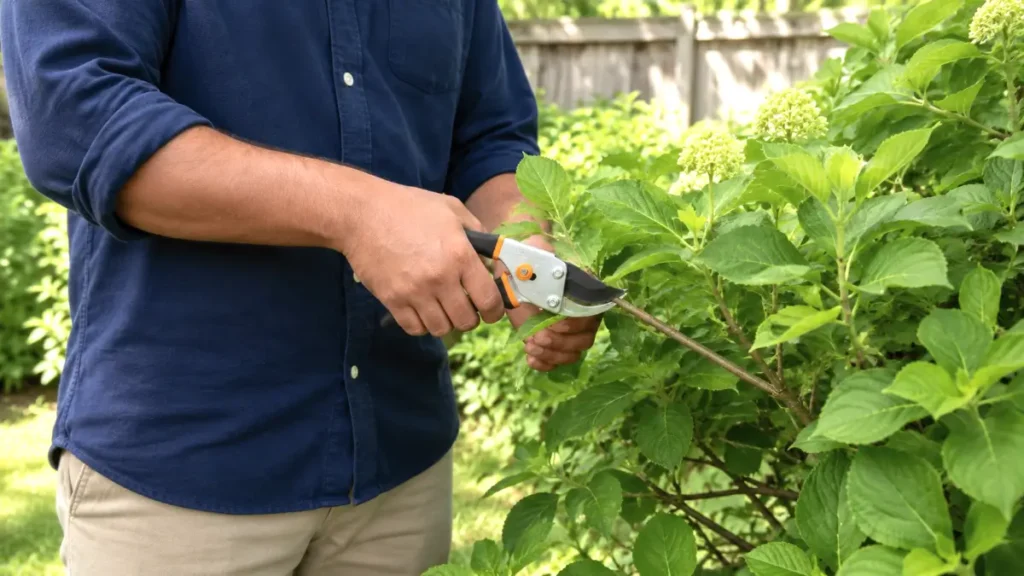
First, I tested the cut quality on green wood versus dry wood. Bypass pruners are designed for live growth, so I snipped hydrangeas, crepe myrtle branches, and tomato plants to check for clean cuts. Then I intentionally pushed them into harder, dead wood nearing that 5/8-inch maximum capacity.
Next, I did a pocket snag and tool pouch test. I repeatedly pulled the 9.07-inch shears in and out of jeans pockets and tool belts to see if the pointed tip or the locking mechanism would catch on the fabric.
I also ran a left-handed usability check, observing how naturally the grip and thumb lock responded when used with the non-dominant hand. Finally, I performed a concrete drop survival test from about five feet up to check the vulnerability of the plastic handles and the center pivot bolt.
The Blade and That “Self-Cleaning” Sap Groove
When you are doing detail work, the blade geometry is everything. These shears feature a precision-ground steel blade with a low-friction coating. In practical use, this coating actually does help the blade glide through sappy stems smoothly.
The self-cleaning sap groove on the bottom anvil blade is a nice touch for a tool in this price range. It channels sticky residue away from the cutting edge so the blades do not gum up after five minutes of trimming pine or ficus.
However, there is a catch. The low-friction coating is prone to scratching off after heavy use. Once that coating gets gouged by a tough branch, the underlying steel is exposed. If you leave these in a damp shed without wiping them down and lightly oiling them, they will start to show signs of rust.
Grip Comfort and the Infamous Safety Lock
At just 0.65 pounds, the weight balance on these clippers is excellent. You can use them for an hour of deadheading flowers without your forearm burning. The non-slip rubberized handles feel secure even if you are working on a humid morning with sweaty hands.
But I have to talk about the locking mechanism. The bright orange sliding lock sits on top of the handle. While it securely keeps the blades closed for safe storage, it is notoriously stiff and can be frustrating to open and close with one hand.
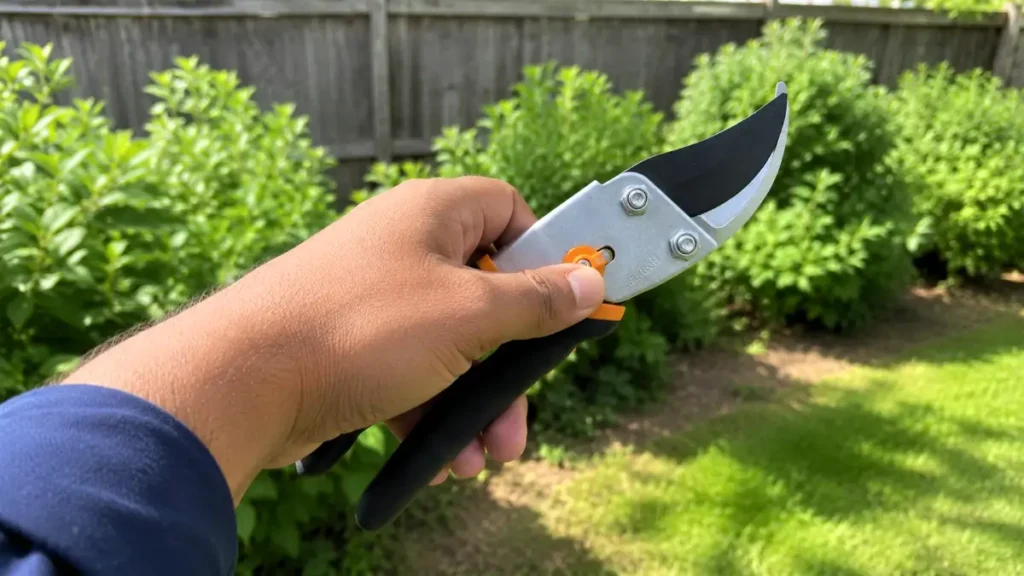
During my left-handed usability test, the lock proved to be highly awkward. Because of its placement, left-handed users have to adjust their grip entirely just to disengage the safety. Furthermore, during my pocket snag test, that same locking switch occasionally caught on the edge of the tool pouch.
Real-World Cut Capacity
Fiskars claims a 5/8-inch cut capacity. In my testing, they slice through 1/2-inch green branches like butter.
But as you approach that 5/8-inch mark—especially on dried, dead wood—you have to squeeze with significant force. If you try to twist or torque the shears to force a cut on a 3/4-inch branch, the bypass blades can slightly separate, which leads to a chewed-up branch rather than a clean cut.
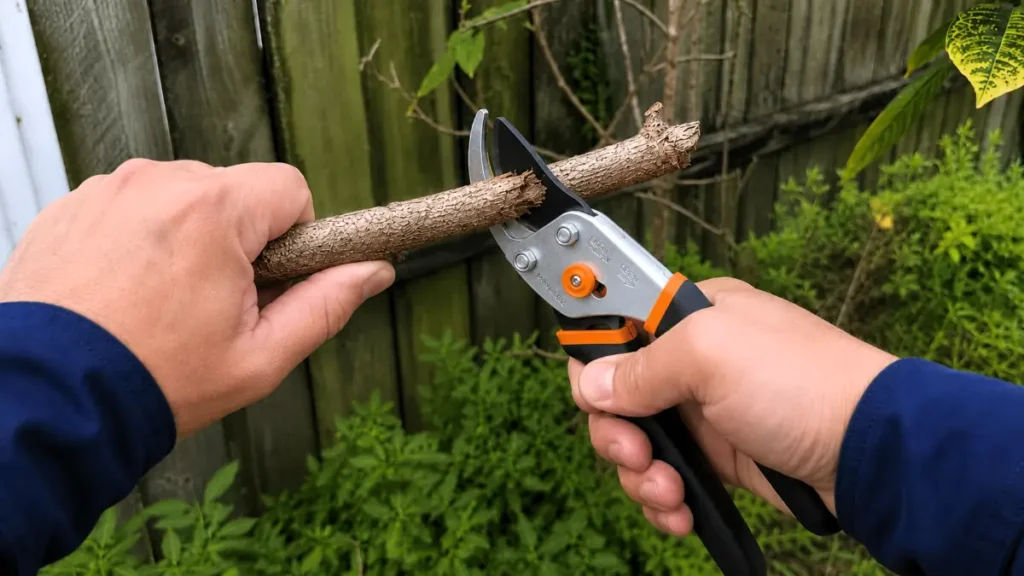
If your yard is full of thick, woody brush, these are not the right tool.
The Pros and Cons Breakdown
Best For
- Homeowners doing light weekend yard maintenance.
- Pruning soft, live growth like roses, tomato plants, and small shrub branches.
- Gardeners looking for a lightweight tool that will not cause shoulder fatigue.
Avoid If
- You are left-handed and prefer easy, one-handed locking.
- You frequently cut dried, dead wood or branches thicker than 1/2 inch.
- You have severe arthritis and need a ratcheting or geared pruner to assist with grip strength.
How It Stacks Up Against the Competition
When you are looking at hand pruners, the market is flooded with options. Here is how the Fiskars model compares to a cheaper alternative and a premium, lifetime-grade tool.
The Real Market Position
The WORKPRO 8″ shears are slightly cheaper and use good SK5 steel, but they rely on an exposed wire spring. Anyone who has dropped a pruner in the grass knows those springs fly off and disappear forever. The Fiskars totally solves this by using a smooth, internal spring mechanism, making it a much more reliable daily-use option for just a few dollars more.
On the other end, the Felco F2 is the undisputed king of pruners. It features forged aluminum handles, cuts 1-inch branches easily, and every screw and blade can be replaced. However, paying over $70 for the Felco is absolute overkill if you only trim a few rose bushes on Sundays.
The Fiskars sits perfectly in the middle. It is cheap enough that you won’t cry if you run over it with a lawnmower, but built well enough to handle 90% of basic suburban yard chores.
Frequently Asked Questions
No. While you might be able to forcefully crush a 1-inch green branch by twisting your wrist, doing so will likely damage the bypass blades. They are strictly rated for a maximum of 5/8-inch cuts. For 1-inch branches, you need loppers or a premium tool like the Felco F2.
They cut perfectly fine in the left hand, but the locking mechanism is positioned for the right thumb. Left-handed users will find unlocking and locking the shears to be quite awkward.
Yes. While they have a low-friction coating to resist sap, that coating scratches off over time. The underlying steel will develop surface rust if left in the rain or stored wet. Wipe them down and apply a drop of mineral oil after heavy use.
Unlike traditional pruners with a visible V-spring or coil spring, the Fiskars utilizes an internal mechanism. It is highly durable and prevents the spring from falling out, but it is not designed to be taken apart and replaced by the user.
Because these are standard bypass pruners, the cutting power relies entirely on your grip strength. If you have arthritis or weak hands, you should look for “ratcheting” or “geared” pruning shears, which mechanically multiply your hand force.
Final Thoughts: Should You Buy Them?
The Fiskars 5/8″ Bypass Pruning Shears offer tremendous value for the everyday homeowner. If you need a reliable tool for pruning flowers, harvesting vegetables, or shaping light bushes, this is genuinely one of the most cost-effective tools you can buy. The hidden spring mechanism is a massive upgrade over cheaper wire-spring models.
However, if you are tackling an overgrown, woody property, or if a sticky locking mechanism is going to ruin your day, you should look elsewhere. For heavy-duty tasks, invest in a pair of loppers or step up to a premium forged-steel pruner. But for standard backyard maintenance, these Fiskars shears will absolutely get the job done.